Monaco Spatial & Visual Atlas · Thematic Layer
75 Spatial Cases · Final Empirical Dataset
Access conditions across physical, economic, social, temporal and normative dimensions.
This thematic layer examines how accessibility is organized through thresholds, barriers, changes in level, economic conditions, rules, time-based arrangements, mediation and other configurations that affect the possibility of approaching, entering, remaining in or participating in a space.
Accessibility is one of the two axes of the Visibility–Accessibility Matrix. It is always analyzed within the Spatial Scope defined for each case: access to a sidewalk, a lobby, a terrace or a pontoon does not necessarily involve the same spatial access regime.
Thematic Question
How Is Access Structured Spatially?
Accessibility is not necessarily a binary condition dividing open spaces from closed ones. Between these extremes lie different degrees and forms of spatial participation.
Bollards, ropes, planters, steps, ramps, doors, opening hours, financial requirements, rules, pontoon entrances and staff mediation can affect approach, entry, circulation and the ability to remain in a space in different ways.
The existence of any of these features does not automatically determine the outcome. The VAM assesses the actual conditions within the defined spatial scope rather than the mere physical presence of a door, barrier or sign.
Core Interpretative Principle
Accessibility Is Not Binary
Between fully open and completely restricted access lie multiple forms of permeability, regulation and participation.
The analysis distinguishes between the existence of a boundary, material form, spatial function, conditions of use and empirical outcome.
VAM Accessibility Dimensions
Five Dimensions of Accessibility
Each spatial case receives a score from 0 to 4 across the five dimensions comprising the Accessibility axis.
A1 · Physical Accessibility
Examines barriers, thresholds, changes in level, doors and other physical configurations affecting approach, entry or physical continuity.
A2 · Economic Accessibility
Considers explicit economic conditions associated with access, consumption, participation or use of the space under assessment.
A3 · Social Accessibility
Examines social conditions that may facilitate, condition or modulate entry and participation. The presence of staff may be relevant, but does not constitute a separate dimension.
A4 · Temporal Accessibility
Assesses how opening hours, closures, events and other temporal conditions modify the availability of the spatial unit.
A5 · Normative Accessibility
Examines rules, procedures, behavioral expectations, signage and other normative conditions associated with access or use.
Final Scoring Coverage
Accessibility Scoring Across the 75 Spatial Cases
The final matrix contains scores for A1–A5 across all 75 spatial cases. Final scoring coverage is therefore complete for all five dimensions.
100% of cases
100% of cases
100% of cases
100% of cases
100% of cases
Accessibility Dimension Scores
75 cases × 5 dimensions
Mean Accessibility
High
Accessibility Feature Typology
From Hard Barriers to Subtle Spatial Boundaries
The following categories describe observable forms of access organization. They are not official VAM Matrix Configurations and do not automatically establish any SECP category.
Hard Barriers
Doors, physical checkpoints, bollards, fences or closures capable of physically interrupting a route.
Soft Boundaries
Planters, ropes, furniture, windbreaks and other edges that distinguish uses without necessarily producing complete closure.
Level Changes
Steps, differences in elevation and topographic changes capable of introducing friction or physical discontinuity.
Route Steering
Configurations that guide or channel movement along particular paths. Geometry alone does not confirm SE2.
Thresholds
Points at which access conditions change: hotels, clubs, boutiques, restaurants, pontoons or residences.
Mediated Access
Situations in which staff, procedures or authorization systems are involved in managing entry.
Cross-Territorial Reading
Accessibility Across the Six Research Areas
The six published Research Areas of the Atlas allow comparisons of the relationships between openness, transition and conditional access.
Place du Casino & Carré d’Or
Extensive areas of public circulation coexist with changes in level, vehicle entrances, establishments, terraces and thresholds subject to specific conditions.
Port Hercule
Highly accessible promenades coexist with gates and transition points leading to pontoons, marinas and private vessels.
Yacht Club de Monaco
The waterfront frontage allows people to approach and observe, while certain institutional thresholds are subject to different access conditions.
Monaco-Ville · Le Rocher
Rue des Remparts remains highly accessible, although its geometry and edges create a clearly defined spatial route.
Larvotto
Monte-Carlo Bay allows a comparison between a hotel threshold and a lobby, both with broad access conditions within specifically delimited scopes.
Fontvieille
The heliport and the private residential entrance help distinguish operational restrictions, safety and private property from other forms of spatial regulation.
Selected Accessibility Profiles
Different Scores, Different Spatial Scopes
The following examples show why the Spatial Scope is essential: a score describes access to the defined spatial unit, not necessarily to the entire building, district or establishment.
VAM-MC-001
Place du Casino
Very high
The square and public routes under ordinary operating conditions.
VAM-MC-097
Port Hercule · Pontoon Access
Low
Crossing toward a pontoon entrance subject to authorization.
VAM-MC-118
Yacht Club Access System
Low
Institutional access system along the perimeter.
VAM-MC-128
Rue des Remparts
Very high
A free and broadly permitted public route.
VAM-MC-077
Monte-Carlo Bay · Lobby
Very high
Lobby and interior circulation within the permitted spatial scope.
VAM-MC-141
Palazzo Leonardo
Very low
Crossing into private residential property.
Evidence Rule
Accessibility Feature ≠ Automatic SECP Confirmation
A1–A5 belong to the Visibility–Accessibility Matrix. A step, rope, door, price, rule or interaction with staff may be relevant to VAM scoring without automatically confirming an SECP mechanism.
When the same asset contributes to both instruments, the matrix keeps the VAM evidentiary function and the SECP empirical decision.
Independently:
SECP Opportunity → Reviewed Empirical Decision
A functional restriction, safety measure or private-property boundary must be interpreted in its context rather than automatically treated as evidence of a motive or intention to exclude.
Selected Visual & Audiovisual Evidence
Six Accessibility Configurations
The selection brings together five photographs and one audiovisual record associated with different accessibility configurations. The SECP Case Result applies to the case as a whole; the Asset Role specifies the evidentiary function attributed to the selected asset.
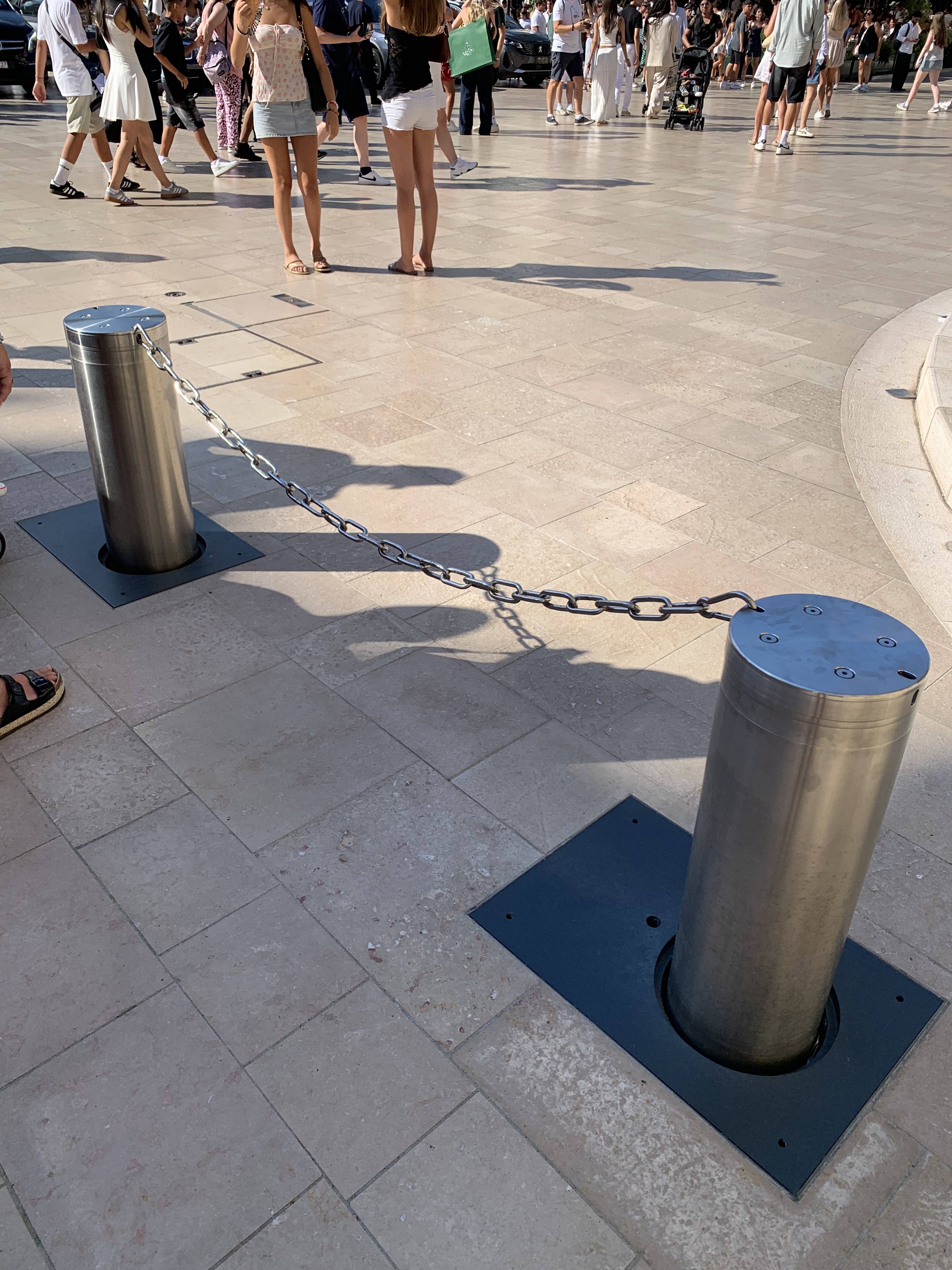
Place du Casino — physical elements of the vehicle access and valet system.
Evidence: Photograph · BAR
VAM Dimensions: A1
Accessibility Score: 65 · High
Matrix Configuration: Publicly Permeable Luxury
SECP Case Result: Confirmed SE1 · SE5 · SE7; SE9 reviewed absent.
Asset Role: Primary evidence for Confirmed SE1. The photograph documents an observable barrier or physical separation within the vehicle-access interface.
© Xavier Reinaldo-Virgili · Monaco Visual Fieldwork Archive
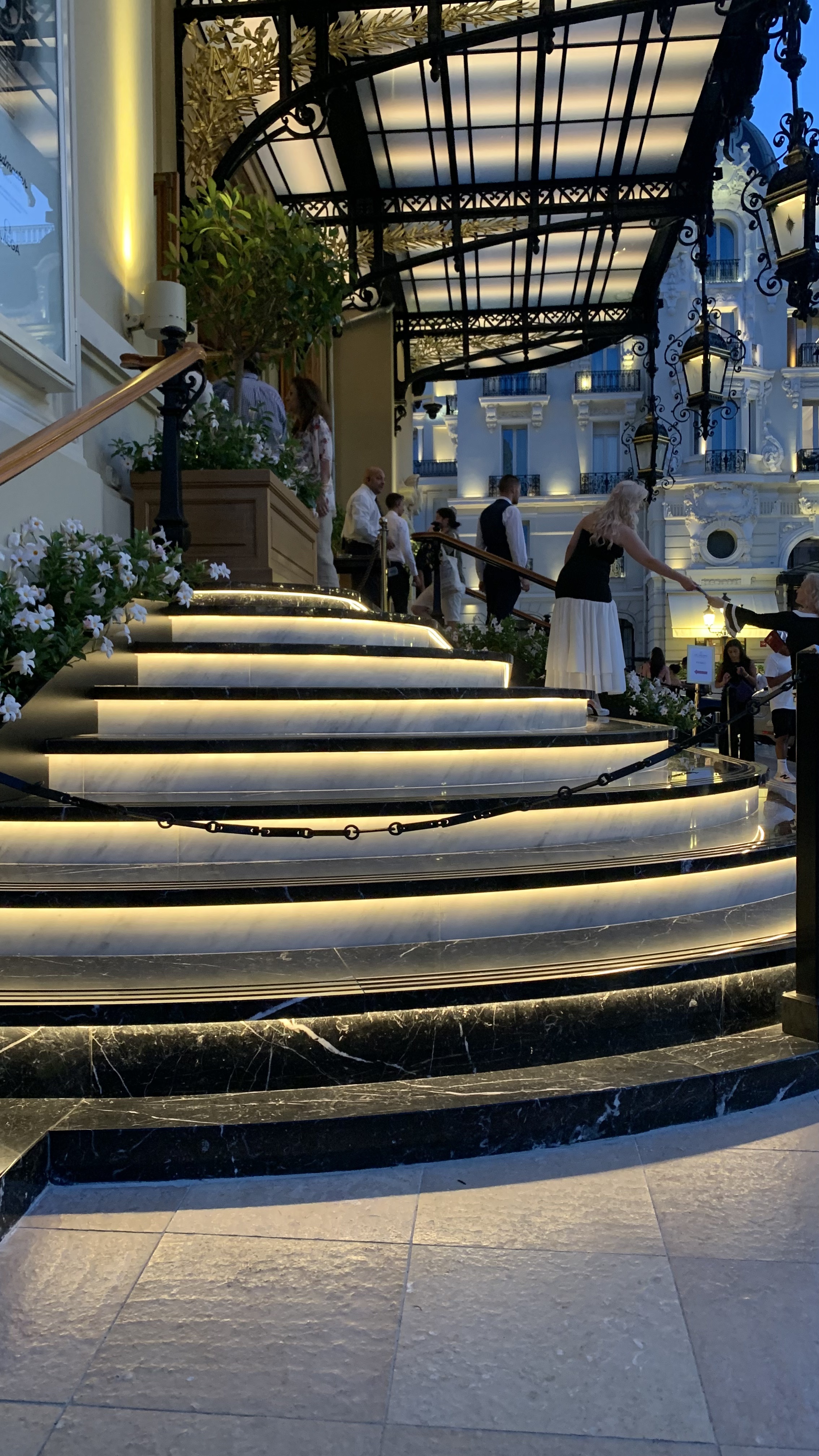
Place du Casino — change in level, step or edge relevant to pedestrian continuity.
Evidence: Photograph · LVL
VAM Dimensions: A1
Accessibility Score: 85 · Very high
Matrix Configuration: Publicly Permeable Luxury
SECP Case Result: Confirmed SE1 · SE10; SE12 reviewed absent.
Asset Role: Primary evidence for Confirmed SE1. The change in level documents a specific physical discontinuity within the assessed spatial scope.
© Xavier Reinaldo-Virgili · Monaco Visual Fieldwork Archive
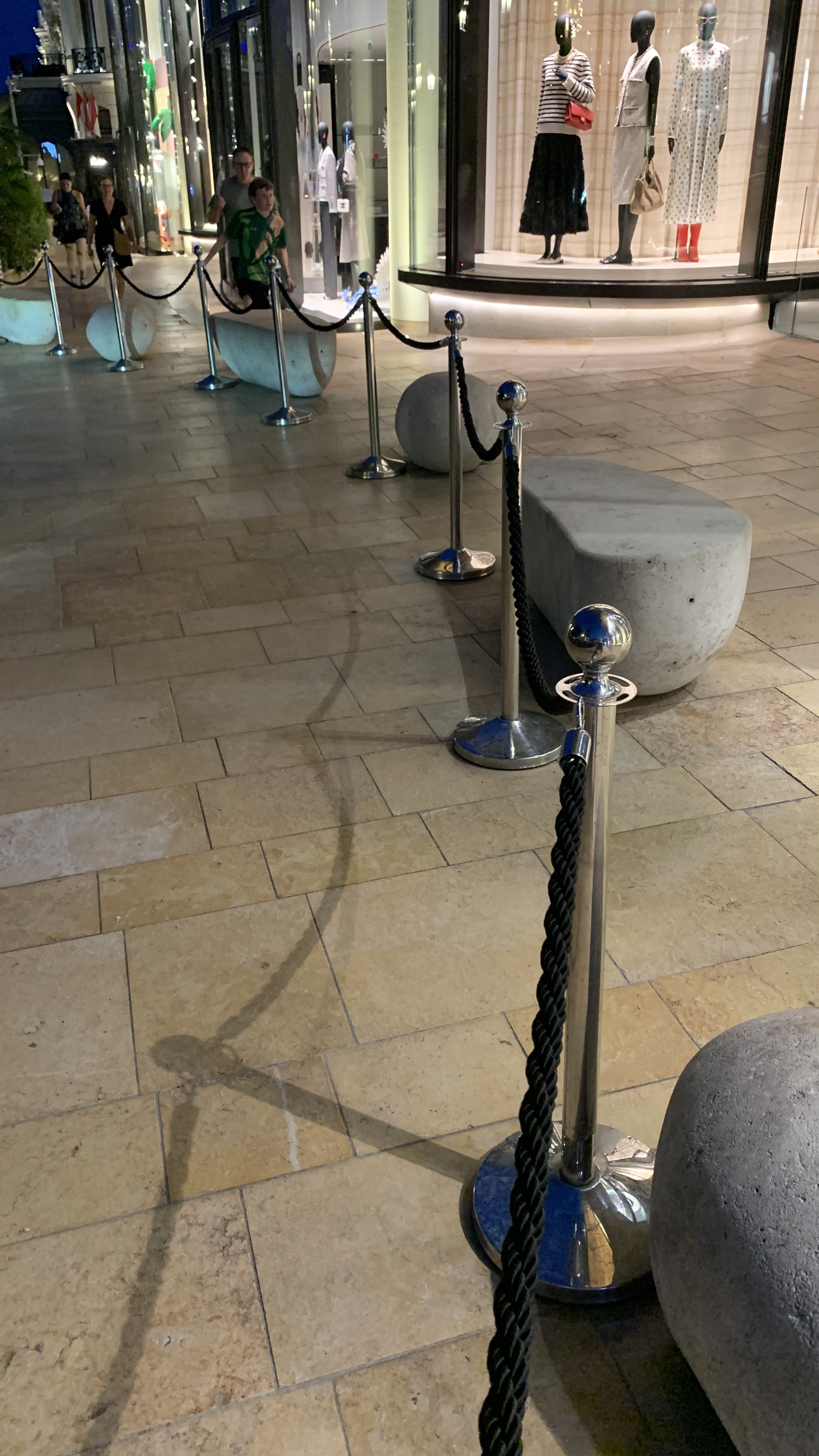
One Monte-Carlo — planters, paving and soft boundaries at the transition with Place du Casino.
Evidence: Photograph · BAR
VAM Dimensions: A1 · V2
Accessibility Score: 95 · Very high
Matrix Configuration: Publicly Permeable Luxury
SECP Case Result: Confirmed SE1 · SE2.
Asset Role: Primary evidence for Confirmed SE1 and SE2. The physical configuration documents both a soft barrier and observable channeling of movement, without turning the route into a closed space.
© Xavier Reinaldo-Virgili · Monaco Visual Fieldwork Archive
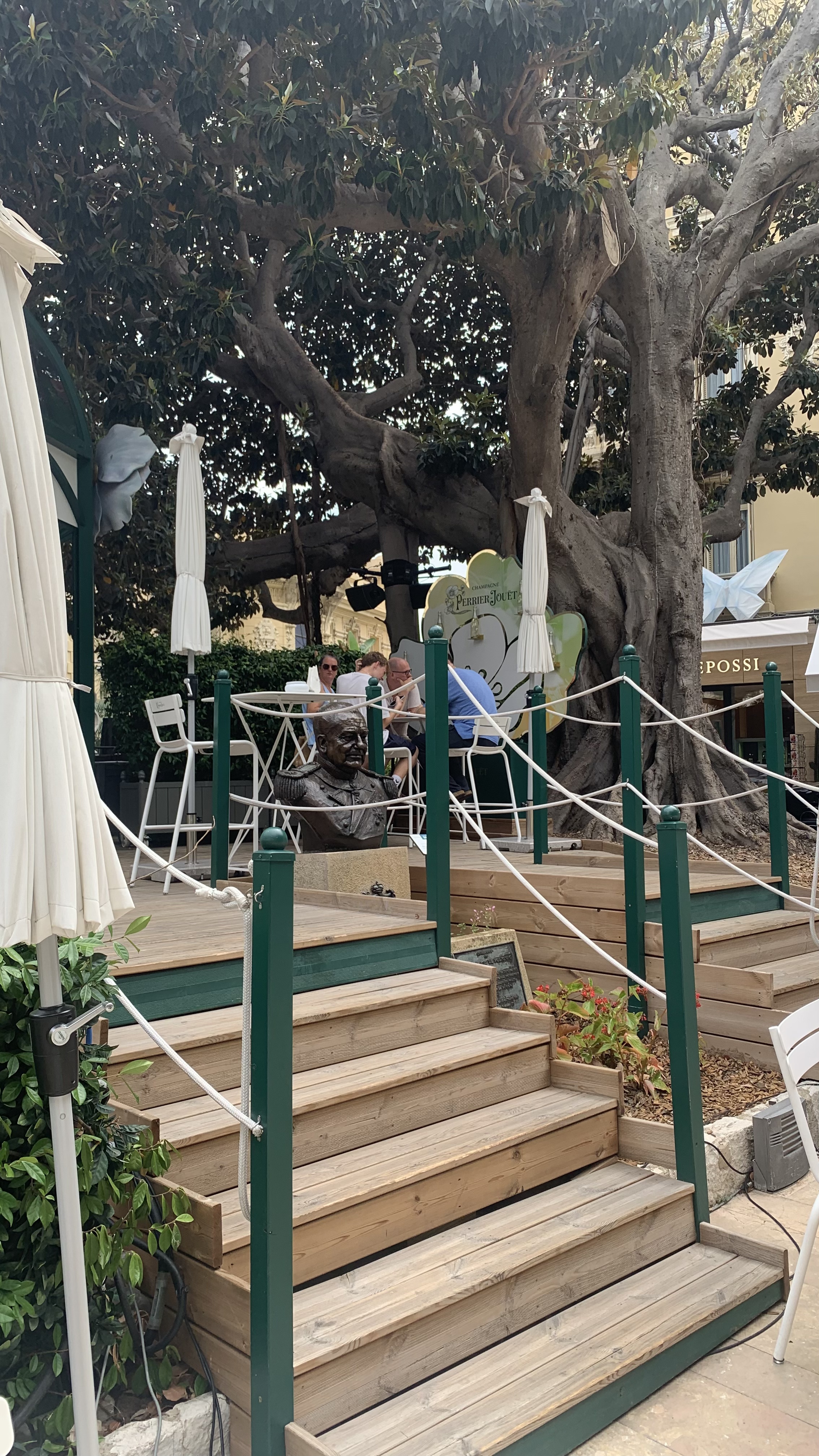
Hôtel Hermitage · Le Jardin Belle Époque — physical delineation between circulation and staying space.
Evidence: Photograph · BAR
VAM Dimensions: A1 · V2
Accessibility Score: 60 · High
Matrix Configuration: Publicly Permeable Luxury
SECP Case Result: Confirmed SE1 · SE2 · SE3 · SE6.
Asset Role: Supporting evidence for SE1 and Primary evidence for Confirmed SE2. SE3 and SE6 are supported by other specific assets from the same case.
© Xavier Reinaldo-Virgili · Monaco Visual Fieldwork Archive
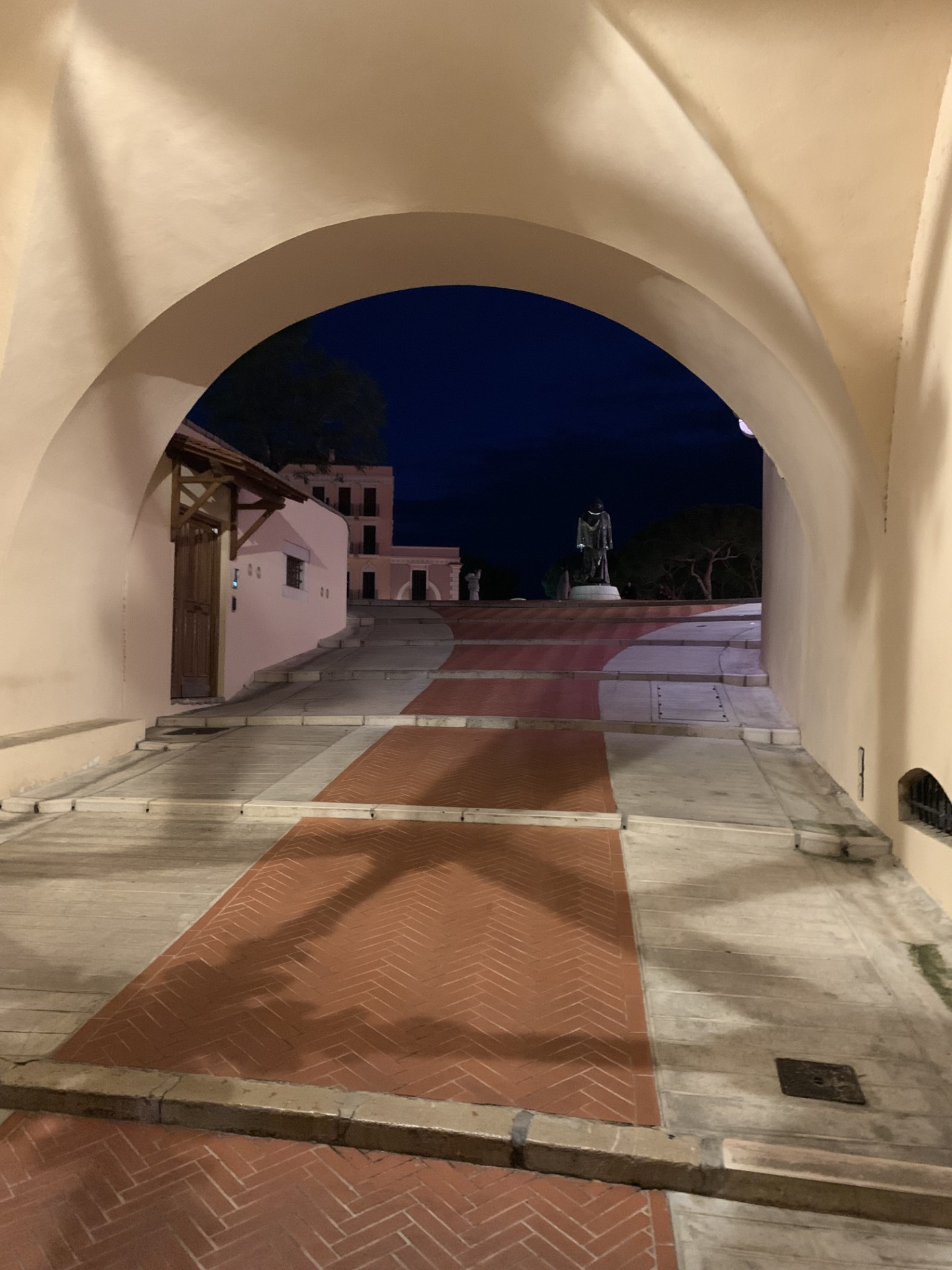
Place d’Armes — access via a ramp leading into a small tunnel.
Evidence: Photograph · APR
VAM Dimensions: V1 · V2 · V5 · A1
Accessibility Score: 70 · High
Matrix Configuration: Conditional or Graduated Permeability
SECP Case Result: Confirmed SE1 · SE2 · SE3; SE5 and SE7 reviewed absent.
Asset Role: Primary evidence for Confirmed SE2. The photograph enables an assessment of the continuity, direction and channeling of access.
© Xavier Reinaldo-Virgili · Monaco Visual Fieldwork Archive
Place du Casino — temporary configuration of pedestrian boundaries using elements capable of modifying circulation, staying or spatial availability.
Original File: IMG_8398.MOV
Evidence: Video · BAR
VAM Dimensions: A1 · A4 · A5
Accessibility Score: 85 · Very high
Matrix Configuration: Publicly Permeable Luxury
SECP Case Result: Confirmed SE1 · SE10; SE12 reviewed absent.
Asset Role: Supporting evidence for Confirmed SE1 and Primary evidence for Confirmed SE10. The sequence reveals the relationship between a temporary arrangement, the pedestrian boundary and spatial availability. The same asset was also reviewed for SE12, which was ultimately assessed as absent within the defined scope.
© Xavier Reinaldo-Virgili · Monaco Visual Fieldwork Archive
Traceability. The Asset IDs, Case IDs, Evidence Codes and VAM dimensions reproduced in this selection retain their analytical correspondence with the master inventory. The published material uses the verified visual or audiovisual file for each asset. Earlier OP references have been removed from the public presentation.
Visual Selection Principle
Expanding the Atlas Without Duplicating the Archive
Evidence in this thematic layer is selected to illustrate accessibility conditions and mechanisms that complement the territorial profiles.
When an already published asset is analytically useful for cross-territorial comparison, it may be reused while retaining exactly the same Asset ID and Case ID.
Analytical Distinction
Barrier ≠ Exclusion
Identifying a barrier or physical discontinuity does not automatically mean that a soft-exclusion mechanism has been identified.
A configuration may arise from safety, circulation, topography, commercial management, operational requirements, private property or temporary transformation.
The VAM records accessibility conditions. The SECP independently assesses specific observable mechanisms. Neither instrument, by itself, permits intentions to be attributed automatically to the actors involved.
VAM–SECP Relationship
From Accessibility Conditions to Mechanism Evaluation
VAM
A1 · Physical Accessibility
Scores the physical conditions of approach, crossing and spatial continuity.
VAM
A2 · Economic Accessibility
Scores the economic conditions of access or participation within the defined spatial scope.
VAM
A3 · Social Accessibility
Assesses social legitimacy, mediation and conditions of participation without reducing the dimension to the mere presence of staff.
SECP
SE1 · Physical and Architectural Deterrence
Assesses whether a material configuration empirically functions as a mechanism of deterrence, separation or filtering.
SECP
SE2 · Route Steering and Circulation Control
Assesses when a configuration produces observable channeling of a route.
SECP
SE8 / SE9 · Security and Staff Mediation
SE8 requires observable surveillance or security. SE9 requires interactional mediation. The mere presence of staff confirms neither.
Accessibility Continuum
From Open Circulation to Controlled Access
This continuum is a descriptive representation. It is not an official VAM scale, a progression of severity or an SECP scale. Each case retains its A1–A5 scores, Spatial Scope and Matrix Configuration.
Interpretative Synthesis
Access Can Be Structured Without Being Completely Closed
The final corpus has an overall mean Accessibility score of 66.60, within the Highband. This value summarizes 75 spatial cases but does not imply uniform conditions throughout Monaco.
The same corpus includes highly accessible promenades and squares, commercial and hotel spaces with intermediate conditions, restricted pontoon entrances, operational infrastructure and private residential thresholds.
Accessibility must always be interpreted in relation to the spatial practice being assessed: observing, approaching, crossing, entering, staying or participating may yield different scores because they represent different uses.
The Accessibility layer therefore enables comparisons of these conditions without equating every barrier with exclusion, every rule with prohibition or every visible space with an accessible one.
Research Connections
Data, Methods and Evidence
Soft Exclusion Coding Protocol
Independent protocol for assessing observable SE1–SE12 mechanisms.
MVFA–VAM Evidence & Code Guide
Guide to Asset ID, Case ID, Evidence Code and VAM dimensions.
Monaco Spatial & Visual Atlas
Atlas Home · Visibility · Accessibility & Barriers · VAM Data · SECP Data

