Monaco Spatial & Visual Atlas · Thematic Layer
75 Spatial Cases · 121 Confirmed Occurrences · Reviewed
Spatial mechanisms that differentiate access, circulation, staying and participation without requiring absolute closure.
This thematic layer examines spatial mechanisms capable of differentiating access, circulation, staying and participation without necessarily relying on an explicit prohibition or complete physical closure.
Barriers, routes, furniture, signage, economic conditions, normative codes, surveillance, human mediation, temporality and spatial legibility are assessed through the Soft Exclusion Coding Protocol (SECP).
Analytical Concept
Soft Exclusion Without Absolute Closure
Spatial exclusion need not always take the form of a closed door or an explicit prohibition. A space may remain visible, traversable or partially accessible while certain mechanisms affect how people enter, where they move, how long they stay or under what conditions they participate.
The SECP organizes these observations into twelve mechanism categories. The protocol does not seek to classify every boundary, rule or barrier as exclusion; rather, it systematically evaluates when sufficient evidence exists to confirm a particular mechanism.
Core Interpretative Principle
Open Does Not Necessarily Mean Equally Accessible
A space may remain formally open while architecture, prices, rules, staff, temporal arrangements or symbolic codes produce differentiated conditions of participation.
At the same time, the mere presence of these features does not automatically demonstrate soft exclusion. The decision depends on the opportunity for observation, mechanism-specific evidence and case review.
SECP Framework
Twelve SECP Categories
The twelve categories identify potentially observable mechanisms. Each category requires its own assessment opportunity and empirical decision.
Physical and Architectural Deterrence
Barriers, changes in level, ropes, gates and other physical arrangements that may hinder approach, entry or use.
Route Steering and Circulation Control
Arrangements that visibly channel, redirect or structure a route.
Furniture and Resting Restrictions
The arrangement of furniture, opportunities to rest and possibilities of staying when they produce a specific restriction.
Visual and Symbolic Signalling
Visual or symbolic codes communicating a threshold, an expectation or a selective condition.
Signage and Informational Filtering
Signs and information that condition access, use, staying or participation.
Economic Conditionality
Prices, consumption, payment or other economic conditions forming part of the participation under assessment.
Normative and Behavioural Filtering
Rules and behavioural expectations that condition uses or conduct within the observed scope.
Surveillance and Security Presence
Observable surveillance or security that spatially regulates use of the setting.
Staff-Mediated Interactional Filtering
Staff intervention that conditions access, staying or participation. The mere presence of staff is insufficient.
Temporal Exclusion
Changes in spatial availability associated with opening hours, opening, closure or other temporal conditions.
Spatial Ambiguity and Discreet Access
Entrances whose poor legibility or discreet configuration makes access difficult to identify.
Temporary Privatisation and Event Transformation
Temporary transformations or events that alter the ordinary regime of use or availability.
Empirical Status Logic
Opportunity ≠ Occurrence
Assessment begins by determining whether there is a relevant documentary opportunity for a given case × category combination. This decision is recorded as YES, UNCERTAIN or NO.
A specific documentary basis exists for assessing the category. YES does not mean confirmed presence.
A potential basis exists, but the evidence does not allow a sufficiently specific assessment. It is excluded from the denominator.
The documentary design contains no relevant opportunity to assess that category in the case.
UNCERTAIN and NO categories are not converted into zeros or empirical absences. Only reviewed YES opportunities can result in confirmed presence or reviewed absence.
Empirical SECP Results
Opportunity-Normalized Results
The 75 cases yield 900 case × category combinations. Of these, 180 are reviewed YES opportunities. The final register retains 121 confirmed occurrences and 59 reviewed absences.
Normalized SECP Rate
YES cases with confirmed presence
÷
reviewed YES cases
| Category | SECP Mechanism | YES | UNCERTAIN | NO | Confirmed | Normalized Rate |
|---|---|---|---|---|---|---|
| SE1 | Physical and Architectural Deterrence | 26 | 34 | 15 | 19 | 73.1% |
| SE2 | Route Steering and Circulation Control | 28 | 31 | 16 | 17 | 60.7% |
| SE3 | Furniture and Resting Restrictions | 12 | 6 | 57 | 8 | 66.7% |
| SE4 | Visual and Symbolic Signalling | 25 | 35 | 15 | 17 | 68.0% |
| SE5 | Signage and Informational Filtering | 16 | 0 | 59 | 12 | 75.0% |
| SE6 | Economic Conditionality | 10 | 0 | 65 | 10 | 100.0% |
| SE7 | Normative and Behavioural Filtering | 12 | 16 | 47 | 9 | 75.0% |
| SE8 | Surveillance and Security Presence | 7 | 4 | 64 | 5 | 71.4% |
| SE9 | Staff-Mediated Interactional Filtering | 16 | 7 | 52 | 9 | 56.3% |
| SE10 | Temporal Exclusion | 12 | 0 | 63 | 7 | 58.3% |
| SE11 | Spatial Ambiguity and Discreet Access | 9 | 49 | 17 | 5 | 55.6% |
| SE12 | Temporary Privatisation and Event Transformation | 7 | 1 | 67 | 3 | 42.9% |
The rates compare only reviewed YES opportunities within each category. They do not represent the percentage of territory affected, the proportion of visitors affected or the overall intensity of exclusion.
Reading the Normalized Rates
Numerator and Denominator Must Be Read Together
Normalized rates enable comparisons among decisions made where assessment was possible, but they are not a ranking of importance, severity or territorial extent.
Economic Conditionality
All ten documented YES opportunities were confirmed. The 100% figure must be read alongside its denominator of only ten assessable cases.
Informational and Normative Mechanisms
Both categories reach a rate of 75%, but they are based on different opportunity sets and must not be combined into a single mechanism.
Physical and Architectural Deterrence
This category distinguishes barriers with confirmed mechanisms from other arrangements better explained by function, safety or routine management.
Surveillance and Security Presence
The denominator is particularly small: a single decision substantially changes the rate. The n/N format should therefore always be retained.
Mechanism Families
Different Ways Spatial Filtering Can Operate
This grouping is intended solely to facilitate thematic reading. All twelve SECP categories remain independent analytical units.
Material
Architecture, barriers, routes and furniture may physically affect circulation or staying.
SE1 · SE2 · SE3
Symbolic & Informational
Visual codes, symbols, signage and information can communicate expectations or conditions.
SE4 · SE5
Economic & Normative
Economic conditions and behavioural rules may structure participation and use.
SE6 · SE7
Human
Surveillance and interpersonal mediation may alter conditions of access or staying.
SE8 · SE9
Temporal & Situational
Opening hours, closures and events may temporarily alter the spatial regime.
SE10 · SE12
Legibility
An entrance may operate selectively when it is spatially ambiguous or discreet and therefore difficult to identify.
SE11
Cross-Territorial Reading
Mechanisms Across the Atlas
The Atlas’s public areas show how the same categories can arise in different functional contexts. Territorial comparison does not remove the need to assess each case separately.
Place du Casino & Carré d’Or
Barriers, routes, prices, rules, security, staff and temporary transformations occur in spaces with high degrees of visibility and permeability.
Port Hercule
Public promenades and strong visibility of nautical luxury coexist with gates, signage and authorized access to pontoons and yachts.
Yacht Club de Monaco
The institutional frontage, access points and YCM Gallery show why visibility, membership and human mediation must be examined as distinct units.
Monaco-Ville · Le Rocher
Rue des Remparts illustrates how a widely accessible route can also exhibit observable route steering.
Larvotto
Monte-Carlo Bay allows hotel permeability, symbolic signalling and staying arrangements to be distinguished within specific spatial scopes.
Fontvieille
The heliport and residential access point make it possible to distinguish confirmed mechanisms from boundaries better explained by operations or private property.
Status-Aware Visual & Audiovisual Evidence
Case Decision and Asset Role
Each record distinguishes the empirical case × category decision from the specific role of the published asset. The same evidence may support a confirmed presence for one category and a reviewed absence for another.
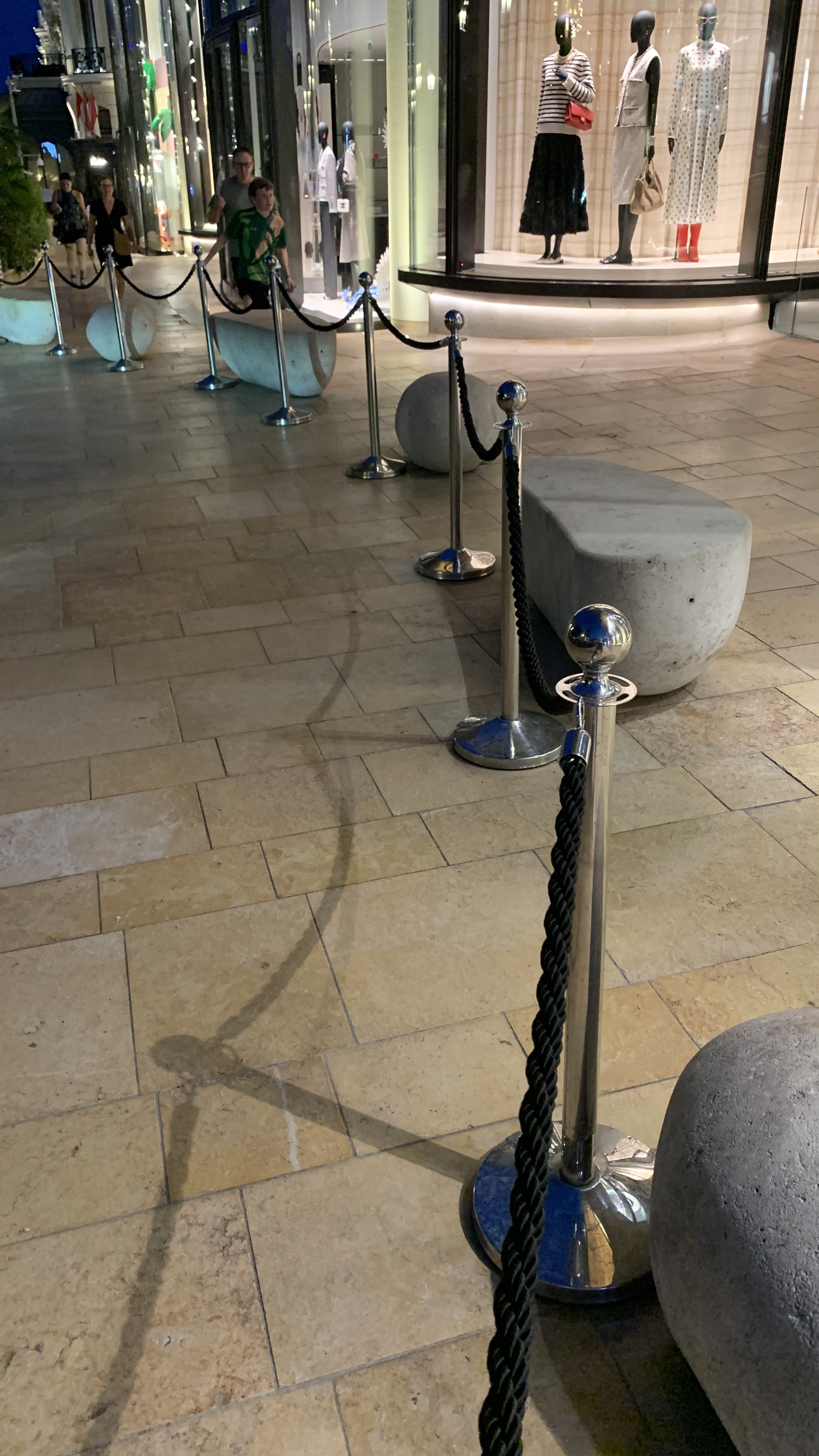
One Monte-Carlo — planters, paving and soft boundaries at the transition to Place du Casino.
Evidence: Photograph · BAR
VAM Dimensions: A1 · V2
Case-Level SECP Result: Confirmed SE1 · SE2.
Asset Role: Primary evidence for SE1 and SE2.
The same arrangement documents a soft barrier and observable route channeling without completely closing the axis.
© Xavier Reinaldo-Virgili · Monaco Visual Fieldwork Archive
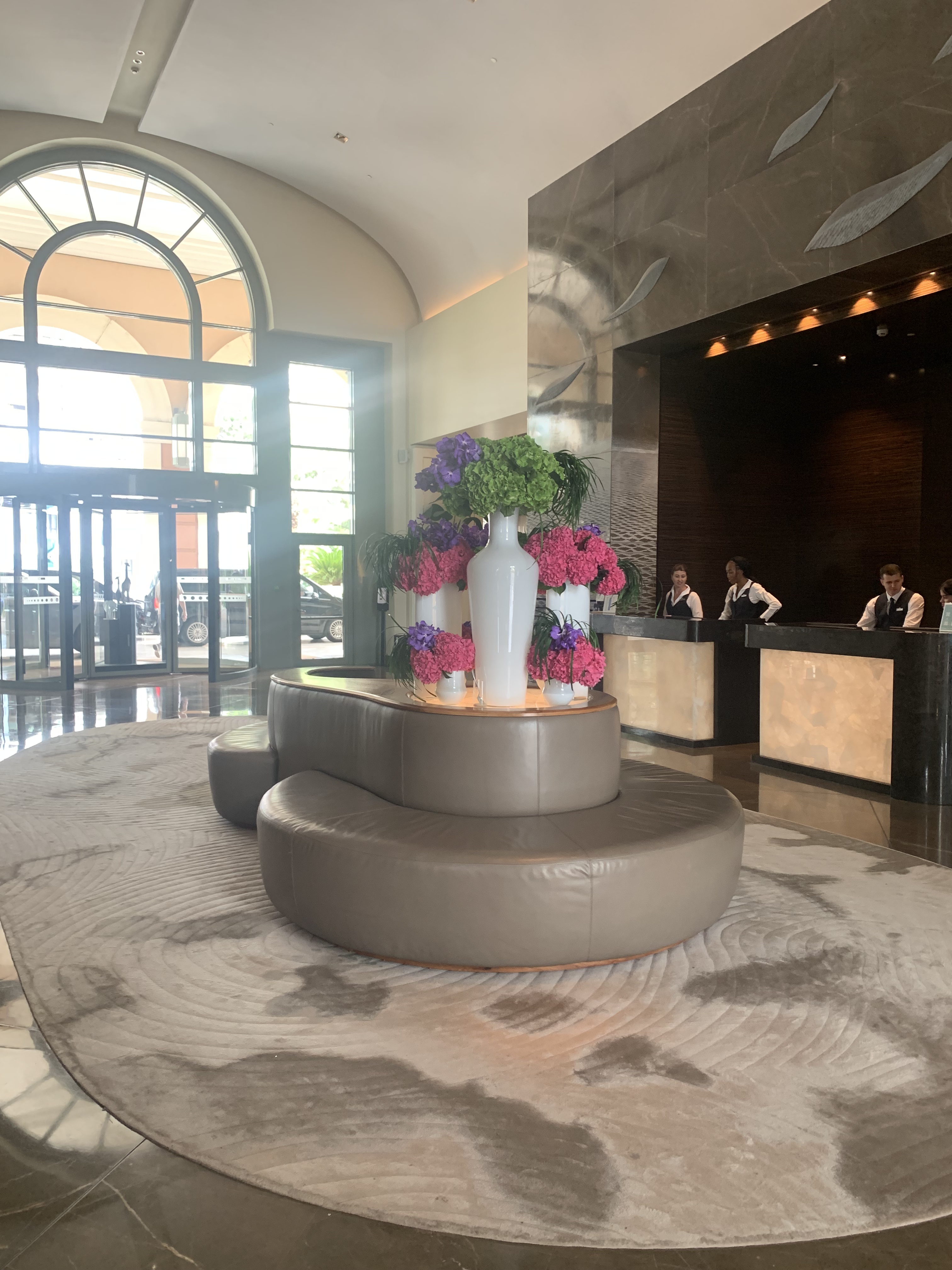
Monte-Carlo Bay — general view of the main lobby.
Evidence: Photograph · CTX
VAM Dimensions: V3 · V4
Case-Level SECP Result: Confirmed SE4; SE3 reviewed absent.
Asset Role: Primary evidence for SE4.
The visual staging contributes to confirmation of Visual and Symbolic Signalling. The presence of furniture in the same area did not confirm an SE3 restriction.
© Xavier Reinaldo-Virgili · Monaco Visual Fieldwork Archive
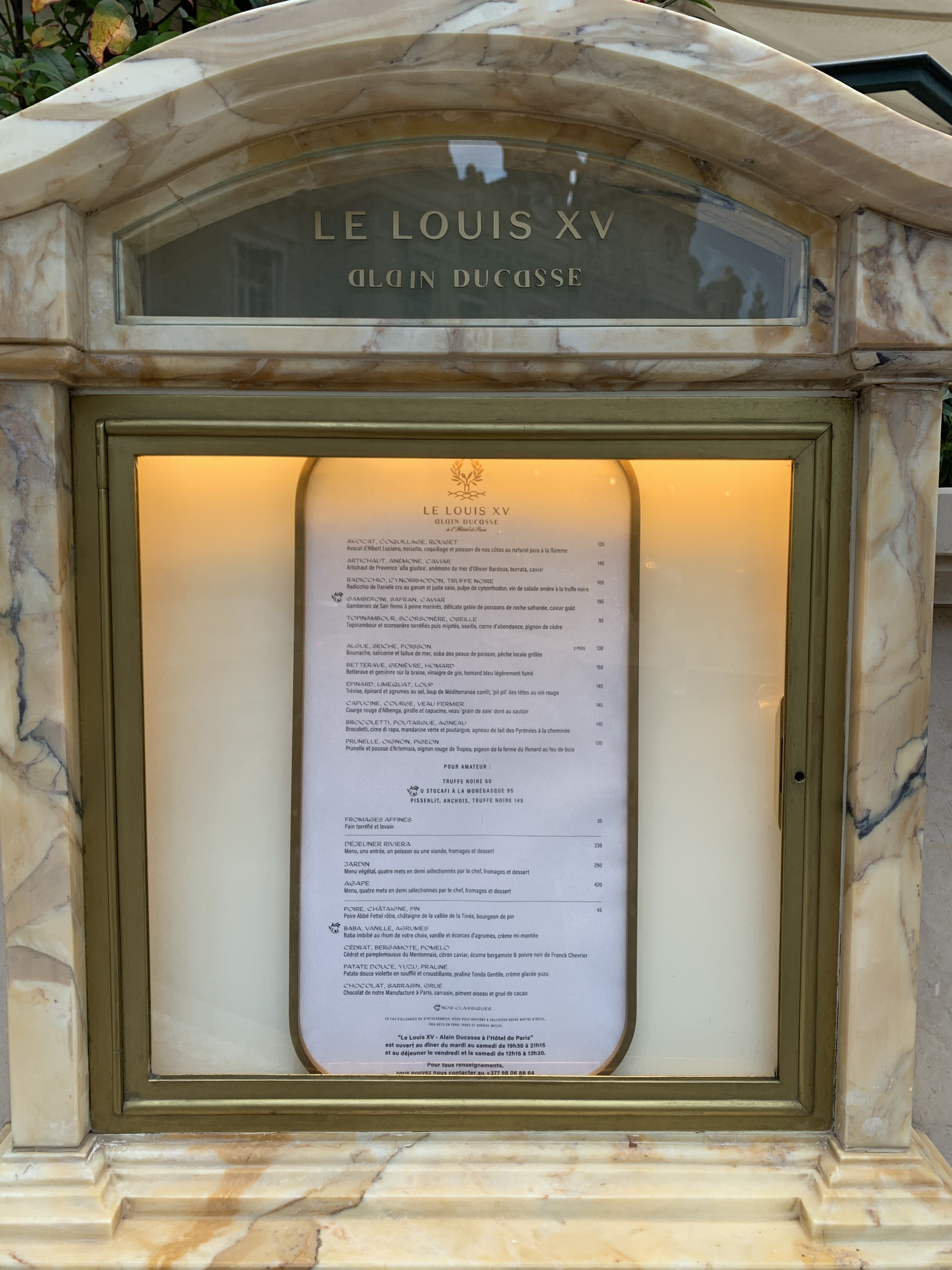
Hôtel de Paris · Le Louis XV — menu or price list with visible prices.
Evidence: Photograph · PRC
VAM Dimensions: A2
Case-Level SECP Result: Confirmed SE4 · SE6.
Asset Role: Primary evidence for SE6.
Price is interpreted in relation to participation in the assessed spatial scope. A high price, isolated from that function, does not by itself constitute an SE6 category.
© Xavier Reinaldo-Virgili · Monaco Visual Fieldwork Archive

Port Hercule — yacht-access threshold with a private-property / no-entry sign.
Evidence: Photograph · RUL
VAM Dimensions: A1 · A5
Case-Level SECP Result: Confirmed SE7; SE5 reviewed absent.
Asset Role: Primary evidence for SE7.
The observed rule conditions a particular behaviour or use. The same sign was assessed for SE5, but that category ended in reviewed absence.
© Xavier Reinaldo-Virgili · Monaco Visual Fieldwork Archive
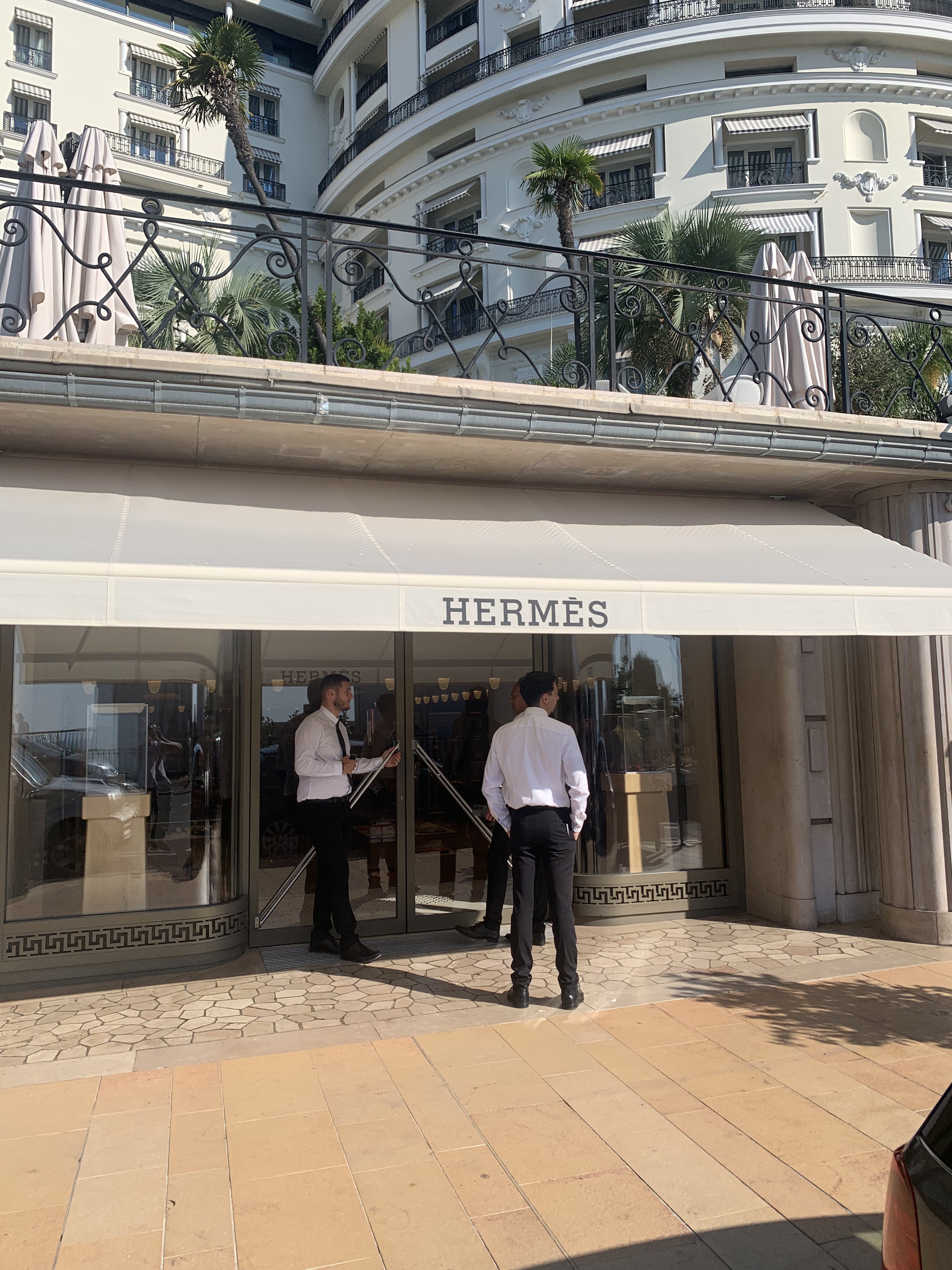
Hermès — security staff positioned at the boutique frontage and threshold.
Evidence: Photograph · STF
VAM Dimensions: A3 · A5
Case-Level SECP Result: Confirmed SE8 · SE9.
Asset Role: Primary evidence for SE8 and SE9.
The record distinguishes surveillance from interpersonal mediation: both categories were assessed and confirmed independently.
© Xavier Reinaldo-Virgili · Monaco Visual Fieldwork Archive
Place du Casino — temporary arrangement of barriers and pedestrian boundaries.
Original File: IMG_8398.MOV
Evidence: Video · BAR
VAM Dimensions: A1 · A4 · A5
Case-Level SECP Result: Confirmed SE1 · SE10; SE12 reviewed absent.
Asset Role: Supporting evidence for SE1 and Primary evidence for SE10.
The sequence makes it possible to observe a temporary change in spatial availability. SE12 was assessed separately and resulted in reviewed absence.
© Xavier Reinaldo-Virgili · Monaco Visual Fieldwork Archive
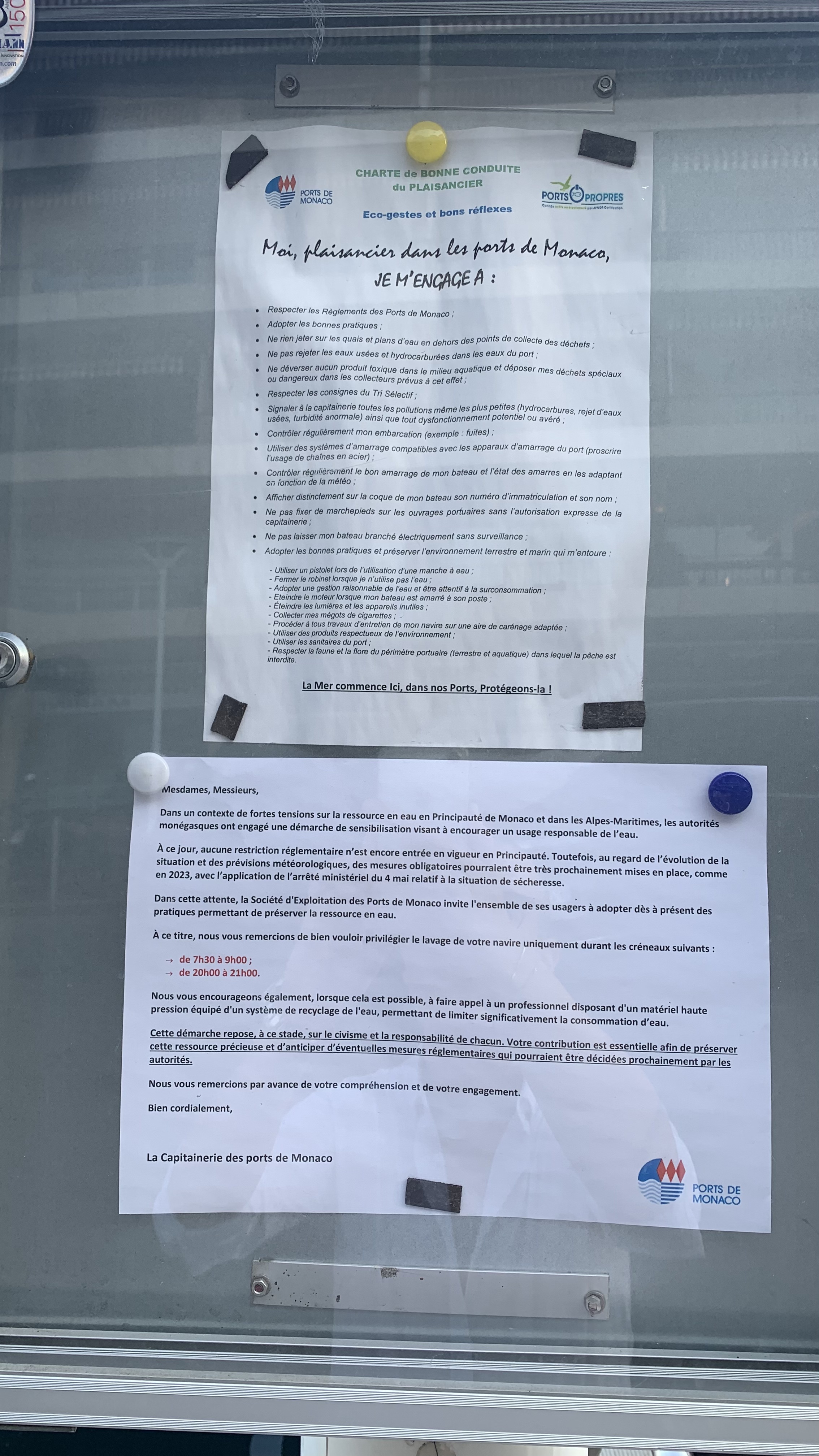
Port Hercule — signage, identification and regulation of a secondary pontoon access point.
Evidence: Photograph · RUL
VAM Dimensions: A3 · A4 · A5
Case-Level SECP Result: Confirmed SE1 · SE5 · SE11 · SE12; SE2 · SE10 reviewed absent.
Asset Role: Primary evidence for SE5 and SE12 and evidence linked to SE11.
The same signage may support assessment of information, legibility and temporality, but each category receives an independent decision.
© Xavier Reinaldo-Virgili · Monaco Visual Fieldwork Archive
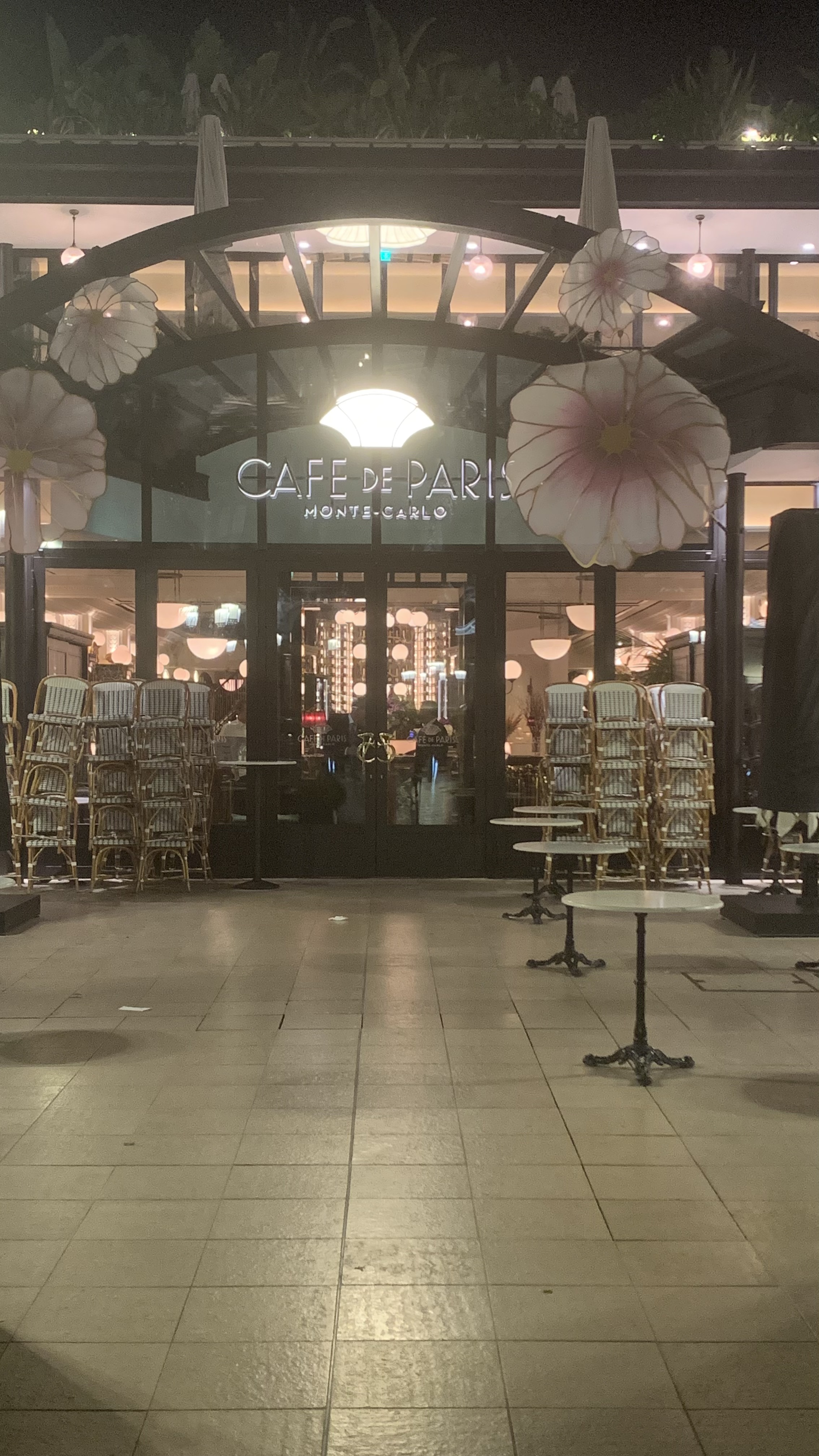
Café de Paris after closing — terrace cleared and chairs removed.
Evidence: Photograph · FUR
VAM Dimensions: A1 · A4
Case-Level SECP Result: Confirmed SE1 · SE4 · SE10; SE3 · SE9 · SE12 reviewed absent.
Asset Role: Primary evidence for SE10; evidence used to review SE3 and SE12.
This asset shows why a documentary candidate is not equivalent to confirmation: temporal comparison confirmed SE10, while SE3 and SE12 resulted in reviewed absences.
© Xavier Reinaldo-Virgili · Monaco Visual Fieldwork Archive
Evidence Roles
Asset Role ≠ Final Case Decision
The inventory may associate an asset with a category to create an assessment opportunity. Following empirical review, the final decision belongs to the case × category combination.
Primary evidence used in assessing the mechanism.
Supports an assessment also grounded in other evidence.
Locates the case spatially without independently demonstrating the mechanism under assessment.
Candidate labels in the inventory describe documentary relationships prior to a decision. In the final publication, the relevant empirical statuses are REAL_CONFIRMED and REAL_ABSENT within reviewed YES opportunities.
Pattern Co-occurrence
Mechanisms Can Coexist
A single case may contain more than one SECP mechanism. Signage may coexist with a rule, a barrier with route steering, or surveillance with interpersonal mediation.
This coexistence does not automatically add up to increasing levels of exclusion. Each category retains its own opportunity, evidence and empirical decision.
↓
Context-dependent spatial mechanisms
Observation Principle
Not Observed ≠ Absent
A photograph may be suitable for assessing a barrier or sign while providing insufficient evidence to examine staff interactions, temporality or economic conditionality.
A specific opportunity exists and can be reviewed.
A potential basis exists, but it is insufficient for a YES assessment.
No relevant documentary opportunity exists within the design.
Confirmed presence among reviewed YES opportunities.
A reviewed YES opportunity without confirmed presence.
Only combinations with Opportunity = YES form the denominator of normalized rates. UNCERTAIN and NO remain explicitly separate.
VAM + SECP
Two Instruments, Two Different Questions
Visibility–Accessibility Matrix
What Is the Visibility–Accessibility Configuration?
VAM describes spatial properties using V1–V5 and A1–A5: what can be seen and under what conditions access or participation is possible.
Soft Exclusion Coding Protocol
Which SECP Mechanisms Are Confirmed?
SECP assesses twelve mechanism categories through specific opportunities and reviewed empirical decisions.
Both instruments may share evidence, but VAM scores do not generate SECP codes and SECP codes do not generate VAM scores.
Analytical Caution
SECP Analyses Spatial Configurations, Not People
The presence of an SECP category does not by itself demonstrate that a particular person was excluded, discriminated against or refused entry.
Nor does it automatically establish the intention or motivation of owners, institutions, employees or designers.
The subject of analysis is spatially observable mechanisms that can differentiate access, circulation, staying or participation. Individual experiences require additional evidence.
Coding Reliability & Consistency
Reviewed Single-Coder Empirical Register
The current empirical register was reviewed and ratified by the researcher responsible for the corpus. YES opportunities and REAL_CONFIRMED / REAL_ABSENT decisions remain traceable by case and category.
The current dataset follows a single-coder design. Accordingly, no intercoder agreement, kappa or alpha estimate is reported, and the review is not attributed to a second coder.
Interpretative Synthesis
Confirmation Depends on the Reviewed Case Record
The final corpus records 121 confirmed occurrences within 180 YES opportunities. The remaining YES opportunities resulted in 59 reviewed absences.
Another 183 combinations remain UNCERTAIN and 537 are NO. Together, these three opportunity classes account for all 900 combinations produced by 75 cases and twelve categories.
Normalized rates must always be read alongside their denominators. For example, SE6 records 10/10, SE5 12/16, SE1 19/26 and SE8 5/7. Differences between these values are neither a hierarchy of importance nor a measure of territorial intensity.
The methodological value of this layer lies precisely in keeping separate observable property, asset function, assessment opportunity, alternative explanation and SECP empirical decision.
Research Connections
Data, Methods and Evidence
Accessibility & Barriers
Thresholds, boundaries and conditions structuring access.
Observation Opportunities
The YES, UNCERTAIN and NO structure used to construct denominators.
SECP Empirical Validation
Empirical application, review and consistency of the protocol.
MVFA–VAM Evidence & Code Guide
Asset ID, Case ID, Evidence Code and traceability.
Publication Rule
Statuses published in the Atlas must match the current SECP register. Any change to Opportunity Status or a REAL_CONFIRMED / REAL_ABSENT decision must first be made in the master dataset and subsequently propagated to the pages where the same case and category appear.
Reusing a photograph or video does not create a new occurrence: one occurrence corresponds to one case × category decision, even if several assets support it.
Thematic Layers
Atlas Home · Visibility · Accessibility & Barriers · Soft Exclusion · SECP Data

