ES·EN
Monaco Research Observatory · Monaco Visual Observatory
VN-001 · Visual Note
Luxury Landscapes · Urban Space & Mobility · Visual Tourism Research
This Visual Note examines how certain high-end vehicles can become visually integrated into Monaco’s everyday streetscape and become objects of observation within the destination experience, while their presence alone cannot establish the motivations of their owners, users or observers.
Visual Research Record
| Record ID | VN-001 |
| Format | Visual Note |
| Title | Luxury in the Everyday Streetscape |
| Research environment | Monaco Visual Observatory · Monaco Research Observatory |
| Location | Monaco · Urban Streetscape |
| Fieldwork source period | 2017–2026 |
| Visual material | Three fieldwork photographs |
| Source collection | Monaco Visual Fieldwork Archive · Broader Visual Fieldwork Collection |
| Public visual source | Instagram · @nice_monaco_ |
| Research themes | Luxury Landscapes · Urban Space & Mobility |
| Analytical status | Independent Visual Research Note · Not a VAM or SECP assessment |
| VAM–SECP Analytical Corpus | Not included |
| Individual OSF asset deposit | No |
01
Research Question
How do high-value vehicles become visually embedded in the everyday streetscape of Monaco?
The question does not seek to determine why an owner uses, parks or drives a particular vehicle, nor does it assume that the vehicle’s presence necessarily reflects a strategy of display.
The observation focuses instead on a more limited and directly documentable feature: the public, visually accessible presence of high-value objects in ordinary settings of circulation, observation and tourist activity.
02
Visual Sequence
The sequence uses three photographs serving different documentary purposes. The images are not presented as a representative sample of the presence of luxury vehicles in Monaco, but as three selected visual observations examining the same relationship between a high-value object and the urban streetscape.
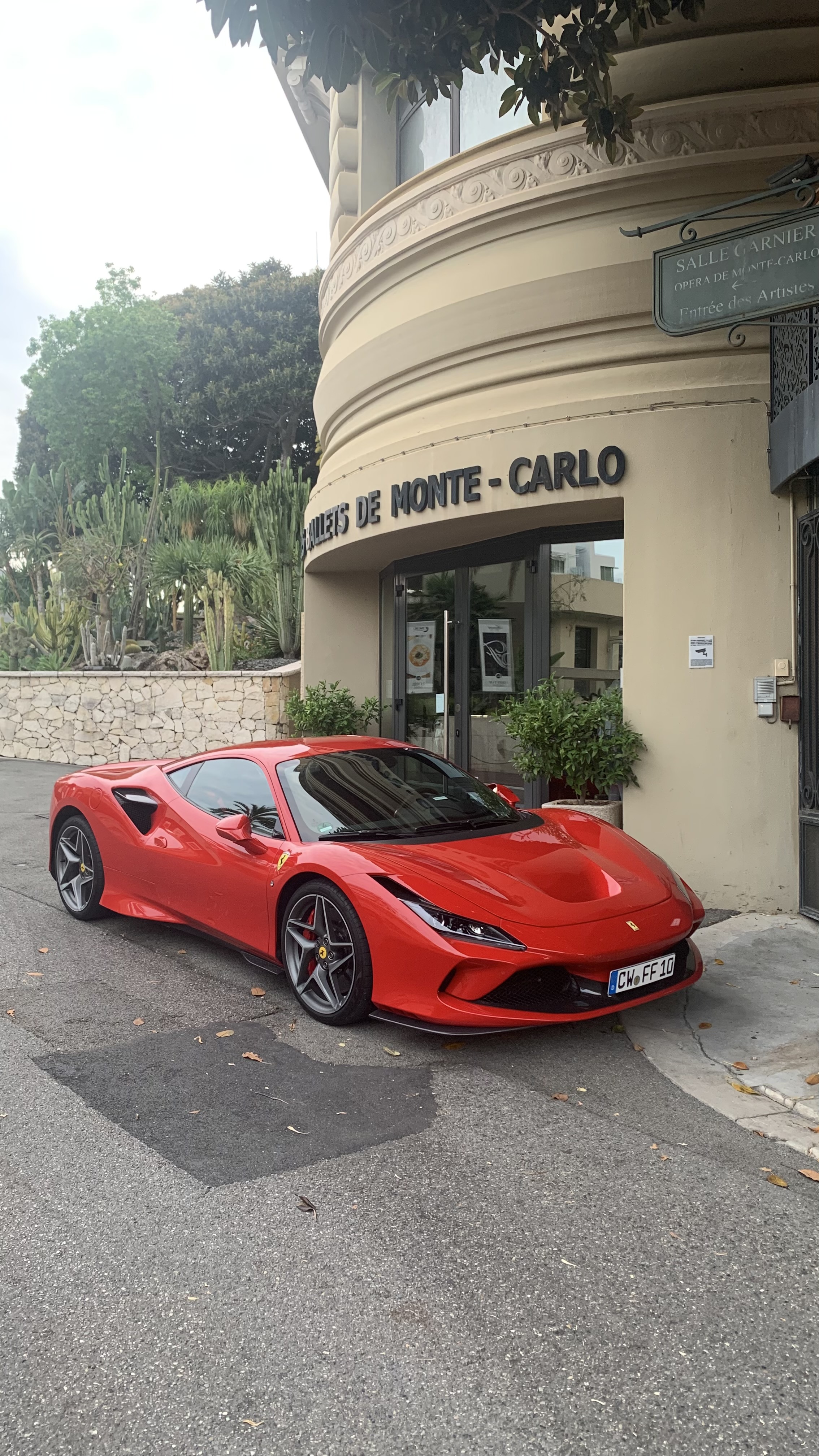
Photograph 1 · Contextual View. A high-value vehicle appears as one component of the wider urban streetscape, sharing the visual field with circulation space, architecture and the surrounding public environment.
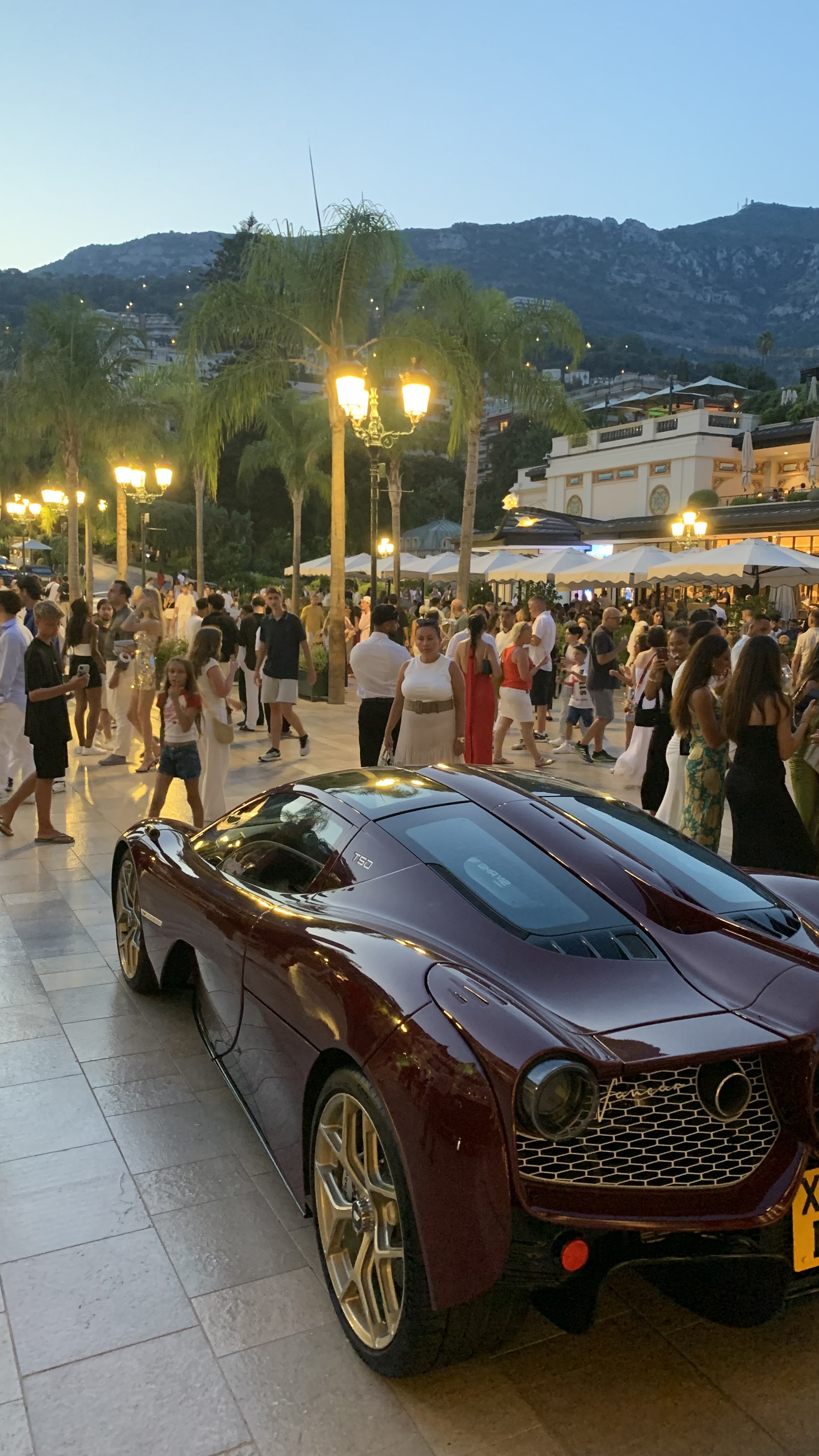
Photograph 2 · Observation View. The street-level scene documents the relationship between the visual exposure of a high-value vehicle and pedestrian observation within the surrounding tourist and urban environment.
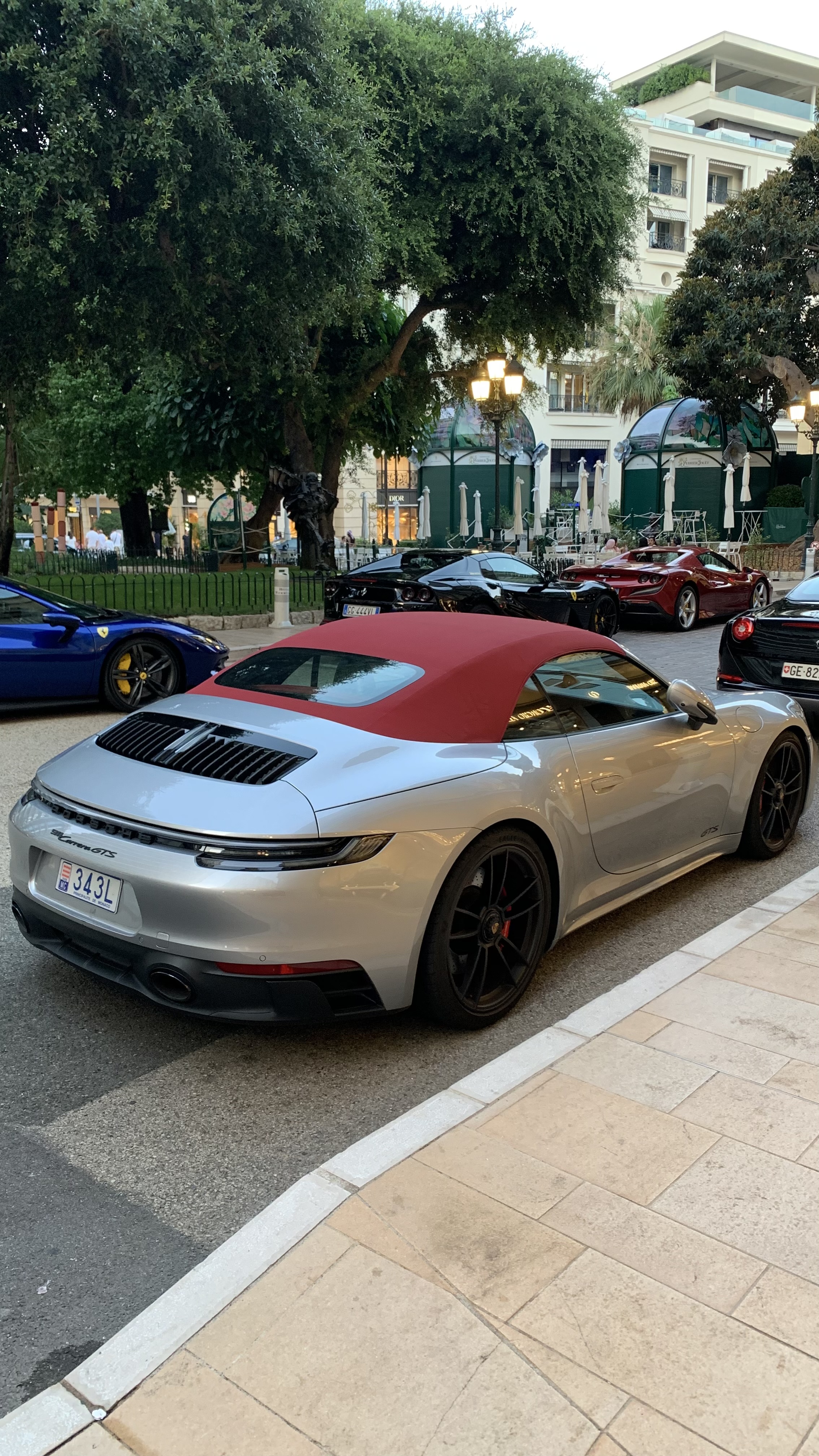
Photograph 3 · Comparative View. A second documented occurrence places a high-value vehicle within another urban configuration, allowing comparison without treating the three observations as a measure of frequency or statistical prevalence.
Public Visual Presentation: Instagram · @nice_monaco_
The original photographs remain part of the Monaco Visual Fieldwork Archive · Broader Visual Fieldwork Collection. Instagram functions here as the public visual presentation and communication layer. The photographs used in this Visual Note are not individually deposited in OSF.
03
Visual Observation
The three images document high-value vehicles in spaces that simultaneously serve other urban functions: pedestrian circulation, mobility, architecture, commercial activity, tourist observation and everyday use of space.
The vehicles do not necessarily appear in spaces specifically designed for their display. Their visible presence overlaps with the ordinary functioning of the street, allowing privately owned objects of considerable economic value to enter the visual field available to residents, visitors and other users of urban space.
The second image also introduces the relationship between object and observer. When pedestrians’ attention to the vehicle is directly visible, the photograph can document an observable form of visual interaction without attributing any particular motivation to those individuals.
04
Research Relevance
The sequence is relevant to the study of luxury tourism because it distinguishes several ways of relating to a high-value object: owning it, using it, gaining physical access to it and observing it are not necessarily equivalent experiences.
A private vehicle may remain materially beyond a visitor’s reach while simultaneously forming part of their visual experience of the destination. Its presence can be observed, photographed and incorporated into personal travel imagery without purchase, use or direct economic participation.
From this perspective, the luxury tourism landscape is not composed solely of goods and services consumed by visitors. It may also include private objects, architecture, vehicles, vessels and commercial spaces that enter the surrounding environment through their visibility.
This distinction is particularly useful for studying destinations where luxury has a strong spatial presence: observation can constitute a meaningful relationship with the landscape even when it entails neither possession nor consumption of the observed object.
05
From Luxury Object to Urban Landscape
The visual significance of these scenes lies precisely in the partial blurring of the boundary between the exceptional object and its everyday surroundings.
A high-end vehicle may retain its distinctive economic and symbolic character while also occupying a street, a parking area, an entrance, a commercial setting or a space close to tourist routes.
Visually, the object thus becomes part of a broader composition:
vehicle → street → architecture → pedestrian observation → tourist landscape
Becoming part of the streetscape does not mean that the vehicle ceases to be private. It means only that its visual presence may extend beyond its use and ownership.
This distinction between material ownership and visual availability is one of the questions the Monaco Visual Observatory can examine through focused observations and subsequent comparisons across different types of objects, spaces and contexts.
06
Interpretative Limits
The photographs can document presence, position, urban context and certain visually observable interactions. They cannot, by themselves, establish the reasons underlying those conditions.
In particular, this Visual Note does not claim that:
- the owners positioned or used the vehicles with the intention of displaying wealth or status;
- the observable presence of a vehicle constitutes, in itself, empirical evidence of conspicuous consumption;
- people observing or photographing the vehicles share the same motivation;
- the three photographs make it possible to estimate the statistical frequency of such vehicles in Monaco;
- the selected examples are representative of all spaces, periods or visitors in the Principality.
The images document a spatial and visual relationship. Interpretations concerning motivation, social meaning or behaviour require additional evidence and specific research questions.
Visibility ≠ intention.
Observation ≠ possession.
Visual association ≠ causality.
Three observations ≠ statistical prevalence.
07
Archive Provenance & Visual Source
The photographs used in this Visual Note come from the Broader Visual Fieldwork Collection within the Monaco Visual Fieldwork Archive (MVFA).
They are not part of the 225-asset analytical corpus used for VAM and SECP and are not presented as evidence for either instrument.
The original files remain in the researcher’s fieldwork archive. The images selected for this Visual Note are presented publicly through the project’s Instagram visual channel.
Public Visual Source
Visual Fieldwork on Instagram
https://www.instagram.com/nice_monaco_/
In this Visual Note, Instagram functions as a public visual source and communication layer. It does not replace the MVFA archival system, nor does it imply that the photographs have been individually deposited in OSF.
08
MVFA Documentation
The provenance of these photographs lies within the Broader Visual Fieldwork Collection, whose structure, scope, identification principles and relationship to different research uses are formally documented in:
MVFA — Broader Visual Fieldwork Collection: Scope and Documentation
Open the MVFA Broader Visual Fieldwork Collection Documentation →
The document establishes the distinction between:
Broader Visual Fieldwork Collection → Structured MVFA Records → research-specific uses → public repository or communication outputs
Using a photograph within the Monaco Visual Observatory does not automatically make it part of the VAM–SECP Analytical Corpus.
09
Methodological Status
| Visual research format | Visual Note |
| Record ID | VN-001 |
| Evidence type | Fieldwork photography |
| Number of images | 3 |
| Source archive | MVFA · Broader Visual Fieldwork Collection |
| Public visual source | Instagram · @nice_monaco_ |
| OSF individual visual assets | No |
| VAM assessment | No |
| SECP assessment | No |
| Research approach | Descriptive and interpretative visual observation |
| Representativeness | Purposive visual selection · Not statistically representative |
10
Related Visual Research
Monaco Visual Observatory
Visual Notes are part of the Monaco Visual Observatory, a research strand within the Monaco Research Observatory dedicated to producing concise, contextualised and traceable visual research.
Explore the Monaco Visual Observatory →
Monaco Visual Fieldwork Archive · MVFA
The MVFA provides the provenance, organisation and traceability infrastructure for the visual materials used by the Observatory.
Explore the Monaco Visual Fieldwork Archive →
Visual Research
Visual Research brings together the visual archive, the Monaco Visual Observatory and research into iconography and visual representation carried out by the Monaco Research Observatory.
VN-001 · Luxury in the Everyday Streetscape
Monaco Visual Observatory · Monaco Research Observatory
Visual Source:
Monaco Visual Fieldwork Archive · Broader Visual Fieldwork Collection
Public Visual Presentation:
Instagram · @nice_monaco_
Archive Documentation:
MVFA — Broader Visual Fieldwork Collection: Scope and Documentation

